GridHack™ Demonstrates a Faster, Smarter Approach to Energy Audits
Congratulations to Orivia Tech on the success of GridHack™ 2026, an ambitious and impactful initiative that brought together university students, AI-driven energy analysis, and real-world building data to explore the future of energy efficiency and climate technology.
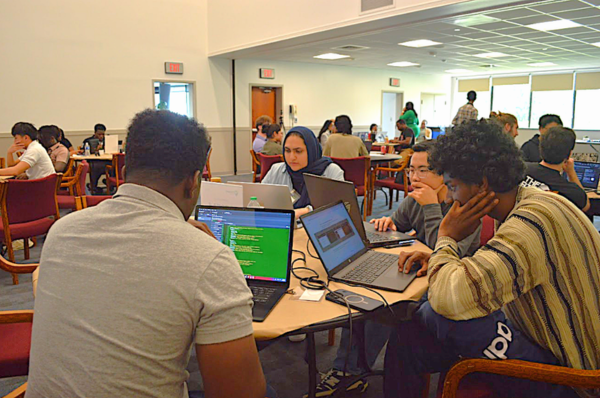
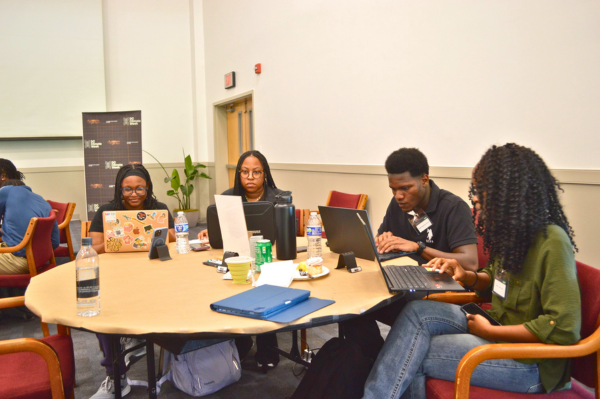
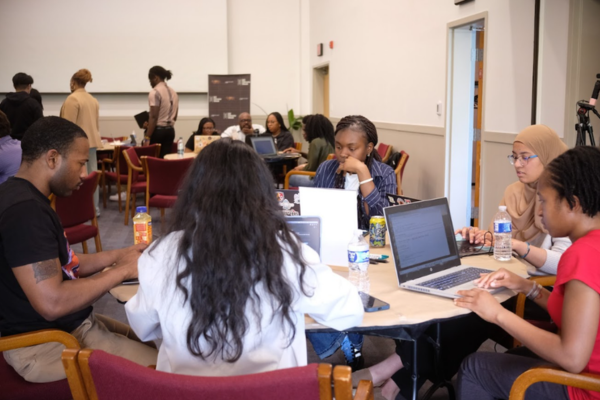
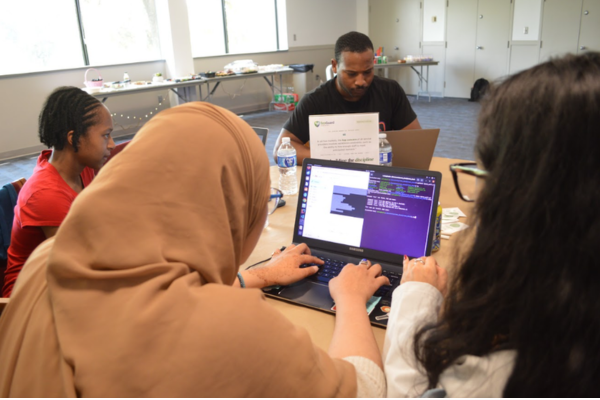
During DC Climate Week 2026, 24 university students gathered at bwtech@UMBC to take on an ambitious challenge: analyze the energy performance of a real Montgomery County public library using AI, environmental sensors, and raw building data — then compare their findings against a professional energy audit already completed for the facility.
What followed became far more than a student exercise. Working through software bugs, broken integrations, authentication failures, and incomplete datasets, the students produced a three-way energy audit analysis that came in 18 Energy Use Intensity (EUI) points below the professional auditor’s target.
The event, GridHack™ 2026, offered a hands-on demonstration of Energy Informatics — the intersection of data science, sensors, AI, and building operations — and its potential to transform how buildings are analyzed and managed.
A Real-World Energy Challenge
Hosted on April 24 as part of DC Climate Week, GridHack™ brought together students from three universities for an applied Energy Informatics working session led by Orivia Tech and faculty mentors.
Participants analyzed a 104,000-square-foot Montgomery County public library using the EcoGuard platform, environmental data collected from a Dyson sensor, and existing building performance data.
Their assignment included:
- Conducting a manual student-led energy analysis
- Running an automated EcoGuard platform analysis
- Comparing both results against a professional auditor’s findings
Rather than participating in a polished demonstration, students worked through intentionally imperfect systems designed to simulate real-world deployment challenges.
Learning Through Problem Solving
To mirror real implementation conditions, Orivia Tech introduced workflow disruptions, authentication failures, and software bugs into the training environment.
Students were forced to troubleshoot systems, create workarounds, manually reconstruct missing datasets, and document their methodologies in real time.
Some teams built sensor integrations from scratch, while others developed hardcoded solutions to bypass technical barriers. In addition to the building analysis, participants also created grant narratives connecting their findings to policy, financing, and community impact.
The result was an immersive demonstration of how AI, sensors, and building data can work together to create faster, more actionable energy insights.
Faster Analysis, Strong Results
Students completed the focused analysis in approximately four hours.
Despite the compressed timeline and intentionally challenging environment, the cohort generated findings that closely aligned with — and in some cases exceeded — traditional audit benchmarks.
The final analysis measured 18 EUI points below the professional auditor’s target, suggesting that AI-assisted, data-driven workflows may significantly accelerate building performance analysis without sacrificing quality.
Organizers said the event highlighted the growing intersection of energy engineering, software development, and climate technology.
Building the Climate Workforce
GridHack™ also served as a talent pipeline for emerging climate technology professionals.
Participants competed for fellowship positions within Orivia Institute’s applied research program focused on responsible AI and energy systems. While initially planned as a $40,000 fellowship initiative, the program ultimately awarded $90,000 to nine students selected for the next phase of deployment work.
Beginning in July 2026, fellows will participate in the Responsible AI Lighthouse Fellowship, applying Energy Informatics tools across a 10-building Maryland cohort.
The event also produced strong workforce outcomes: 12 of the 24 participants ultimately received fellowships or related professional opportunities.
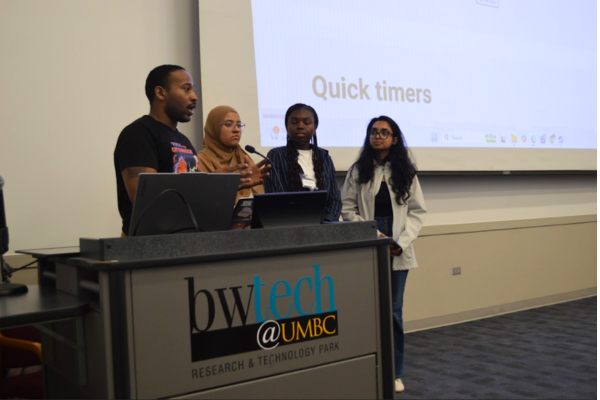
Winners included six UMBC students who won $10,000 fellowships in our applied research pilot:
- Endegena Assefa
- Romain Geofrey Donfack Dzeinse
- Jin Nagashima
- Akanksha Madhu Kiran
- Fareedah Owolabi
- Nadia Faruqui Gauto
Reimagining Energy Audits
Traditional energy audits are often time-intensive, expensive, and difficult for smaller organizations to implement at scale.
GridHack™ explored whether AI-assisted analysis, low-cost sensors, and interdisciplinary student teams could make building performance analysis more scalable, accessible, and actionable.
The results suggest significant potential.
By combining human problem-solving with environmental sensing and AI-assisted workflows, students demonstrated how future energy audits may evolve from static reports into dynamic, continuously updated systems capable of translating building data into operational decisions.
In the process, one public library became both a classroom and a testing ground for the next generation of climate technology innovation.
Please join us in congratulating Orivia Tech on this impressive, impactful success!
Interested in sponsoring GridHack 2027, or bringing an energy audit to your building?